
The main drivers of high cost per contact in enterprise call centers are not the AI tools themselves, but the gaps between them: latency that compounds across millions of interactions, the cognitive load agents carry when they bridge unintegrated systems in real time, and usage-based billing that climbs with adoption regardless of the value delivered. An experienced outsourcing partner addresses these drivers by taking ownership of orchestration, naming a single system of record, and holding one team accountable for how the tools fit together, rather than layering another platform on top.
In an AI-enabled contact center, a single customer interaction involves layers. How well those layers work together decides whether the technology is making the operation faster or quietly driving up the cost per contact. When these AI-driven layers are well integrated with modern IVR technology, the customer never knows they are there. When they are not, the agent ends up bridging any gaps in real time. In a sense, agents become the integration layer that the company never invested time in.
That reconciling work, that accumulation of moments in which the agent quietly covers for systems that were never taught to work together, is where the hidden contact center costs tend to accrue, often hurting first contact resolution rates.
In an AI Stack that Grows One Approved Tool at a Time…
The layers may not fail because any one of them is weak. They’ll fail because each arrived with its own business case and budget line. Agent assist gets approved to shorten average handle time, and automated QA gets approved to grade every call instead of a sampled few. Each decision is sound on its own terms, but what no one explicitly signs off on is the cumulative weight of all of it landing on a single screen, with no one accountable for how call routing and the pieces fit together.
The spending behind this trend keeps climbing, too: Gartner expects more than half of customer service organizations to double their technology spend in just a couple of years, without a matching reduction in talent. More tools land on the same desktop, and the same people are left to make them work together.

…the Customer Feels the Seams
AI is certainly capable of addressing customer friction points in the omnichannel contact center, but a lack of true integration remains a serious barrier. Customers still find themselves repeating information that a previous system already captured, or hearing one answer from the chatbot and a different one from the agent who picks up after it.
In regulated industries, especially, experiential “seams” like these do more than annoy. When a knowledge model and a CRM record disagree inside a healthcare or financial services interaction, an inconsistent answer can become a compliance or disclosure problem. What reads as friction in a retail queue can turn into exposure in a regulated one.
Recall the Canadian tribunal that held Air Canada liable after its website chatbot told a customer he could claim a bereavement discount after booking, something the airline’s own policy did not permit. That tribunal rejected the company’s argument that the chatbot was a separate entity it could disown. Ultimately, a business owns every answer its systems give, whatever layer produced it. When those layers disagree, the customer is not the only one left exposed.
The Biggest Costs Don’t Show Up as Explicit Line Items
The license fee is the visible number, but the costs that move the business case sit underneath it. Latency is one example: that half-second of system lag that compounds across millions of interactions. Cognitive load is another, and it grows fastest in exactly the complex, emotional moments where a human agent is meant to add the most value and has the least attention to give.
The most difficult to model is the adoption gap. MIT’s NANDA initiative found that only about 5 percent of enterprise AI pilots deliver rapid revenue impact. The rest stall with little measurable effect on the P&L. The initiative traced the shortfall to weak integration into real workflows rather than to the quality of the models themselves.
The pricing model adds pressure of its own. Much of contact center AI is billed by usage, so monthly cost climbs as adoption climbs. A summarization tool can lower after-call work and raise AI consumption charges in the same quarter.
Key Question: Will the value scale faster than the cost, or are we simply paying more for a more complicated way to do the same work?
AI Orchestration Must Take Priority
Sorting out where AI belongs in the workflow, and where it does not, is what decides whether all that spending compounds into a return or into drag. That means naming one system of record, so the agent works from a single place rather than five or ten. It means auto-populating the fields that a human used to re-enter by hand. And it means putting each AI capability where the work needs it rather than wherever a vendor sets it by default.
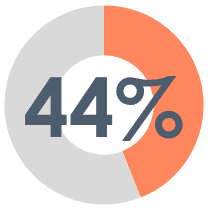
AI fragmentation has grown costly enough to earn its own organizational focus. Take the agent desktop itself, for example: Metrigy’s study of 656 companies found that more than 44 percent named improving the agent desktop interface as a CX transformation priority.
In the realm of contact center AI, none of this orchestration arrives off the shelf. The reflex is to reach for one more platform, a single pane of glass to sit over everything else, but a tool bought to unify tools is still one more layer competing for the agent’s attention. Instead, orchestration is an operating decision about which capabilities belong on the desktop and who is accountable for how they fit together.
That is operational work, and it rewards discipline over spend.
How Can AI-Enabled BPO Help Enterprises Lower Costs Through Smarter Automation and Routing?
An outsourcing partner’s role is to make the orchestration decisions most internal teams never get around to: naming one system of record so agents work from a single screen, auto-populating the fields a human used to re-enter by hand, and routing each interaction to the right mix of automation and human judgment based on its complexity rather than sending everything down the same path. Intelligent routing means routine, low-complexity contacts get resolved through self-service and automated workflows, while the interactions that need a human get to an experienced agent with full context already attached.
This is different from simply adding more tools. A BPO partner absorbs the operational discipline of deciding where AI belongs in the workflow and where it doesn’t, so cost climbs with actual value delivered rather than with tool adoption alone.
Bringing Hidden AI Costs to the Surface

Soon every tool a contact center uses will arrive with AI inside it, and the pull to keep stacking will likely grow. The operations that come out ahead will treat that abundance as a prompt for restraint.
AI works best in a contact center when it makes experienced agents faster and more consistent and clears the routine so they can give their full attention to the calls that need a human, whether in an inbound or outbound call center. The judgment on the hard ones, and the accountability for every answer the operation gives, still rests with people. The companies that absorb this stop chasing the next tool and start drawing full value from the talent and the AI voice agents they already have.
The hidden cost of all those layers was never the software on the invoice. It was the gaps between them, the time and the metered spend swallowed by systems that don’t quite talk to each other. Close those gaps, and the cost comes down.
Ultimately, the customer cares that the person on the line has what they need the moment they need it. At DATAMARK, this is the everyday work: running contact center operations so existing AI tools pay off on the floor without inflating invoices. Put simply, better-integrated tools do more, while experienced people continue to lead the way.
If the gap between what your contact center AI promised and what it costs to run is one you want to close, let’s start a conversation.
FAQs About Reducing Cost Per Contact
Cost per contact comes down when the gaps between AI tools close, not when the tools themselves are removed. Consolidating onto a single system of record and reducing the number of disconnected platforms an agent has to reconcile in real time lowers licensing and cognitive overhead simultaneously, while quality holds steady because agents spend their attention on the conversation instead of bridging systems that were never taught to work together.
Poor integration between AI layers is what hurts first-contact resolution in the first place, since agents end up manually reconciling information that separate systems already captured. Fixing that integration, through a single system of record and auto-populated fields, removes that reconciling work entirely, which lowers cost per contact and improves CSAT and first-contact resolution at the same time rather than trading one for the other.
The available data points to integration, not tool quality, as the deciding factor. MIT’s NANDA initiative found that only about 5 percent of enterprise AI pilots deliver rapid revenue impact, tracing the shortfall to weak integration into real workflows. Gartner separately expects more than half of customer service organizations to double their technology spend without a matching reduction in headcount. Outsourcing to a partner whose core job is managing that integration is what turns AI investment into a lower cost per call, since the shortfall shows up regardless of which tools a company buys.
A Canadian tribunal held Air Canada liable after its website chatbot told a customer he qualified for a bereavement discount after booking, something the airline’s actual policy did not permit, and rejected the argument that the chatbot was a separate entity the company could disown. A business owns every answer its systems give, regardless of which layer produced it. In regulated industries like healthcare and financial services, a disagreement between a knowledge model and a CRM record isn’t just customer friction; it can become a compliance or disclosure problem.
Metrigy’s study of 656 companies found that more than 44 percent named improving the agent desktop interface as a CX transformation priority. The priority isn’t buying one more platform to unify everything else, since that just adds another layer competing for the agent’s attention. It’s naming one system of record, auto-populating the fields agents used to re-enter by hand, and placing each AI capability where the actual workflow needs it rather than wherever a vendor defaults it to.