An accent can shape perceptions from the first few words.
Listeners begin forming accent-based judgments almost instantly. All it takes is a moment for listeners to begin forming judgments about a speaker based on their accent.
In the BPO voice channel, that snap judgment shapes everything that follows: whether the customer trusts the agent, how long the call takes, and whether the issue gets resolved on the first attempt. Research into accent-based bias in service encounters has found that customers who don’t get the outcome they want are significantly more likely to rate accented agents negatively—even when the service itself was comparable to what a non-accented agent delivered.
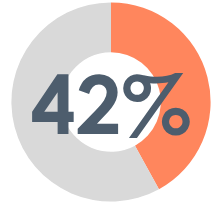
This isn’t a new problem, but it’s getting harder. According to CMP Research, 42% of CX leaders cite global coverage as their primary reason for outsourcing; they’re deliberately building delivery teams whose agents are likely to sound different from their core customer base. That structural reality, combined with a new category of AI-powered tools designed to address it, is forcing the conversation in a way it hasn’t been before.
That the technology works is a foregone conclusion. But are organizations deploying it thoughtfully enough to get the outcomes they actually need?
The Accent Problem Is Bigger Than Comprehension
It’s tempting to frame accent friction as a simple comprehension issue: the customer can’t understand the agent, the call takes longer, and satisfaction drops. That’s part of it. But the research suggests something more uncomfortable.
Accent bias operates even when comprehension isn’t the issue. Studies from the University of Southern California and the Australian National University have demonstrated that listeners perceive speakers as less credible when audio quality degrades. A person’s accent may function similarly. It becomes a proxy for competence, trustworthiness, and the likelihood that the caller’s problem will be resolved.
The operational consequences are measurable. ContactBabel research found that 37% of BPOs report rejecting at least three-quarters of applicants due to accent. That’s a staggering constraint on the talent pipeline, especially at a time when the industry is already grappling with high attrition.
For agents who do get hired, the pressure to modulate their natural speech patterns during every call creates a cognitive burden that contributes to fatigue and burnout. The accent-as-workforce-issue ripples through hiring, training, retention, and daily performance.
What Accent Neutralization Actually Does
AI-powered accent tools analyze speech in real time and adjust specific phonetic elements to make the speaker easier for the listener to understand. The better implementations preserve the agent’s natural voice, emotional tone, and cadence while reducing the specific friction-causing speech pattern.
The terminology is evolving. Vendors and analysts increasingly prefer “accent harmonization” or “accent conversion” over “neutralization.” Neutralization implies there’s a correct, default way to sound. Harmonization frames the goal differently: Reduce listener effort without erasing the speaker’s identity.
Accents can be translated without losing the voice and emotion of each speaker. For example, CX Today reported that 12 of the top 20 customer service BPOs have partnered with Sanas, which raised $65 million at a valuation exceeding $500 million.

How DATAMARK Does It
DATAMARK implements accent conversion through Krisp, a leading platform in the space. Agents interact with it through a simple toggle during active calls, with no perceptible latency and no disruption to call flow. What the customer hears is a version of the agent’s voice with phonetically smoothed speech patterns; what the agent experiences is their own voice, unaltered on their end, with the freedom to communicate naturally.
But here’s what most vendor demos don’t tell you: the technology works significantly better—and in some cases only works well—when two conditions are met:
For buyers evaluating accent neutralization as part of a voice channel strategy, these two conditions are the difference between a deployment that delivers on its metrics and one that disappoints. The technology is sound. What determines outcomes is the talent foundation underneath it.
Listen to how a DATAMARK agent sounds with accent conversion on and off.
What Sets Accent Neutralization Tools Apart
Before recommending accent tools for a client program, DATAMARK evaluates whether accent is actually the friction point. Sometimes, audio environment, scripting, or call routing is the more significant variable. Deploying accent technology on top of a process problem produces modest results at best.
Where accent conversion is the right intervention, deployment follows a structured rollout:
- Agent orientation
- Opt-in framing
- Feedback loops during the initial period
- QA calibration against both customer-facing and agent-experience metrics
As for expected performance, deployments across the industry have shown measurable reductions in average handle time, improvements in first-call resolution, and NPS gains. TTEC reported that deploying Krisp’s accent conversion technology cut language-barrier mentions by 54% and lifted NPS from 74 to 85.
The Question Leaders Should Be Asking

An ICMI analysis puts it best: are companies addressing a genuine communication gap, or accommodating customer bias by altering how their workforce sounds?
The answer is probably both. Here’s where a leader’s judgment is indispensable.
Accent neutralization deployed as a blanket mandate sends one message to agents: your voice isn’t good enough. Deployed as an optional tool within a broader communication strategy—one that also invests in training, audio quality, and inclusive hiring—it sends a very different message: we’re removing a barrier so you can do your best work.
Critics argue that modifying accents reinforces the idea that certain ways of speaking are inherently less desirable, and that the technology risks a form of cultural erasure—particularly when it’s predominantly applied to agents in India, the Philippines, and Latin America to make them sound more palatable to Western customers.
There’s also a practical tension. If AI normalizes the suppression of linguistic diversity, it may discourage organizations from investing in the cultural competency training and inclusive practices that address the root cause of accent bias rather than its symptoms. One industry observer noted that if companies prioritize “neutral” accents over authentic speech patterns, they risk signaling that diverse accents are a barrier to excellent service rather than a reflection of a global workforce.
All good reasons to be intentional about how leaders introduce this technology, decide who controls it, and determine what role it plays within a larger operational framework.
What “Thoughtfully” Looks Like
As leaders, our challenge is to equip CX teams with tools that foster connection and resolution. Accent neutralization, when done thoughtfully, is one way to meet that challenge. But “thoughtfully” has to mean something specific:
The Voice Channel Deserves More Than a Quick Fix
The accent barrier is real, measurable, and consequential. Ignoring it means accepting a narrower talent pool, higher agent attrition, and a voice channel that underperforms its potential. But treating accent neutralization as a plug-and-play fix misses the larger opportunity.
The organizations that will get this right are the ones that treat communication clarity as a leadership challenge. They’ll use AI-powered tools where those tools genuinely reduce friction. Perhaps most importantly, they’ll pair those tools with the operational investments in hiring, training, and agent experience that make the voice channel what it’s supposed to be: a place where customers feel heard, and agents feel equipped to help.
At DATAMARK, we work with operations leaders who understand that voice channel performance depends on more than technology alone. It depends on how processes, people, and platforms are aligned around a single goal: making every interaction feel effortless for the customer and sustainable for the agent. If that’s the standard you’re working toward, let’s talk.