
Outsourcing has evolved well beyond a cost-cutting exercise.
Outsourcing has evolved well beyond a cost-cutting exercise. As Deloitte principal Kort Syverson put it in the firm’s Global Business Services Survey, “What has become clear is that cost is a deteriorating value proposition. A GBS organization must diversify its value.” That survey found that more than 50% of GBS organizations now consider next-generation capability development and customer experience as top priorities. Companies are increasingly in search of outsourcing partners they can depend on. They are looking for a partner that brings deep industry expertise, earns brand trust through consistent delivery, and provides strategic support that goes beyond task execution.
That shift raises a critical question: how do you measure trust in a business relationship where your operations, data, and customer experience are in someone else’s hands?
The global BPO market is projected to grow from over $400 billion to nearly $500 billion in the coming years, according to industry data from Statista. That is a lot of money flowing into partnerships where trust can make or break the outcome. Yet many organizations still rely on gut feelings, a few reference calls, and pricing comparisons when selecting a BPO provider.
Keep reading to learn how to move beyond surface-level assessments when selecting a new provider or auditing an existing one.
The Trust Gap in Outsourcing
Trust in outsourcing has always been a concern. But today, it carries more weight than ever.
According to KPMG’s Global Third-Party Risk Management Survey of 851 organizations, 48% named cyber risk or information security as the top driver of their third-party risk strategy, and 45% pointed to regulatory and compliance risk. The survey positions third-party oversight as central to enterprise resilience, which means trust between organizations and their outsourcing providers has moved from a soft consideration to a board-level concern.
And yet despite this, third-party risk remains a significant concern. A study by Prevalent found that 61% of companies experienced a third-party data breach or security incident in the past year, a 49% increase over the year before. And the risks are personal. KPMG’s survey frames third-party oversight as a governance issue that intersects with workforce, operational, and reputational risk.
The gap between what companies want (trust) and what they often get (uncertainty) is the core problem. And it only widens when you consider the expanding scope of outsourcing. According to Deloitte’s survey, 50% of executives now use outsourced services for front-office capabilities like sales, marketing, and R&D.
When you hand over front-office operations to a provider, you are outsourcing your reputation. And that requires a level of trust that goes far beyond a signed contract.
The Six Pillars of the BPO Trust Index
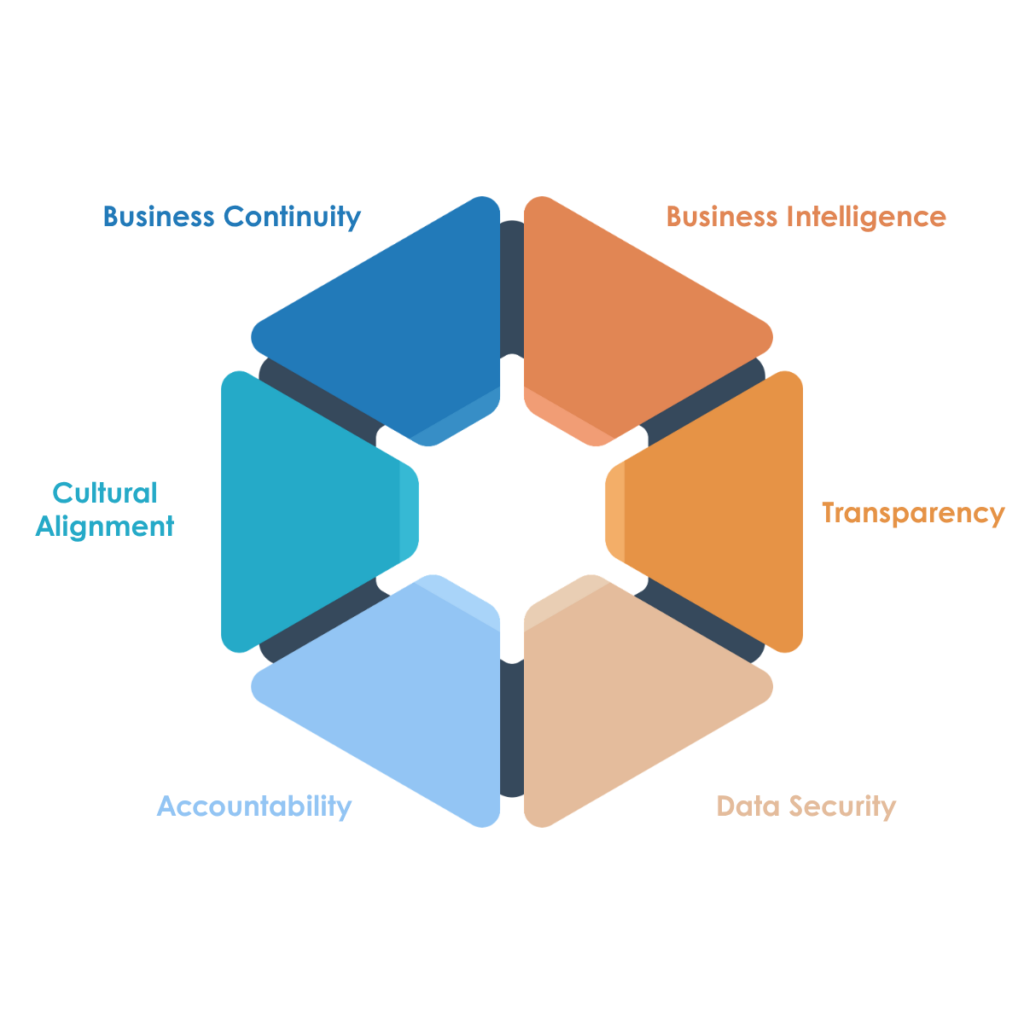
Trust is built from multiple factors working together consistently over time. The BPO Trust Index breaks trust down into six measurable pillars that any organization can use to assess a current or potential outsourcing partner.
1. Strategic Insight and Business Intelligence
Most mature buyers in the market today are looking for a partner that thinks beyond the day-to-day. A partner that captures data from every customer interaction and turns it into actionable intelligence that improves the business upstream and downstream. This means surfacing trends from call data that inform product development, identifying service patterns that reduce escalations before they happen, and providing analytics that help leadership make better decisions about staffing, technology, and customer strategy.
The BPO providers that stand out in 2026 are the ones treating every interaction as a source of insight. They are using AI-powered transcription, sentiment analysis, and real-time reporting to deliver value that extends well beyond handling customer inquiries efficiently. They are giving their clients a window into what their customers are actually saying, feeling, and needing, and packaging that intelligence in a way that drives operational and strategic improvement.
What to look for:
A BPO that handles your calls well is a vendor. A BPO that uses what it learns from those calls to help you improve your products, your processes, and your customer strategy is a partner. The difference between the two is the difference between competence and competitive advantage.
2. Operational Transparency
Transparency is the foundation of every trusted partnership. It means having clear visibility into how your outsourced operations are running in real time.
A trustworthy BPO partner should provide access to live dashboards, performance reports, and operational data without you having to ask for it. You should be able to see call volumes, handling times, quality scores, and customer satisfaction trends as they happen.
What to look for:
Transparency also means being honest when things go wrong. A provider that hides problems or delays reporting them is a liability.
3. Data Security and Compliance
Data security is no longer optional. It is a deal-breaker.
According to IBM’s Cost of a Data Breach Report, the global average cost of a data breach was $4.44 million, down 9% from the year before, thanks to faster detection powered by AI and automation. But the risks are growing in new directions. The same report found that 97% of organizations that experienced an AI-related breach lacked proper AI access controls, and shadow AI was a factor in 20% of breaches, adding $670,000 to average costs. This urgency is reflected in CX leadership priorities as well. CMP Research found that reducing fraud, protecting sensitive data, and increasing data security were all cited as top priorities by CX leaders.
When you outsource business processes, you are giving a third party access to sensitive customer data, internal systems, and proprietary information.
What to look for:
The PwC Global Digital Trust Insights survey found that 77% of organizations expect their cybersecurity budgets to increase, while only 2% reported having implemented cyber resilience across their entire organization. This means most companies are spending more on security, but still have significant gaps. Your BPO partner should be actively closing those gaps.
4. Performance Accountability
Trust is built on results. A BPO partner that consistently delivers on their commitments is one you can count on. A partner that makes promises without backing them up with measurable outcomes is one you should question.
Performance accountability goes beyond standard SLAs. It means having clearly defined success metrics, regular performance reviews, and a shared commitment to continuous improvement. It also means being willing to tie compensation to outcomes.
Outcome-based delivery models are growing in adoption, with more organizations favoring results-driven relationships over traditional time-and-materials arrangements. This is a positive sign. When your provider’s success is directly linked to your success, the incentives are aligned.
What to look for:
Ask for historical data. Any provider worth trusting should be able to show you their track record, not just highlight reels from their best months.
5. Cultural Alignment and Workforce Investment
Culture might seem like a soft metric, but it has real business consequences. When there is a disconnect between how your company operates and how your BPO partner operates, it shows up in the quality of customer interactions, the retention of skilled agents, and the overall effectiveness of the partnership.
A trustworthy BPO partner invests in their people. They provide meaningful training, clear career development paths, competitive compensation, and a work environment that retains talent. This is increasingly urgent across the industry. According to CMP Research, CX leaders highlighted upskilling front-line employees and reducing front-line employee attrition as top priorities. High turnover at a BPO provider becomes your problem when experienced agents leave, and new ones need to be trained on your processes from scratch.
What to look for:
The BPO industry is increasingly moving toward knowledge process outsourcing, which requires skilled professionals rather than general call center agents. According to industry analysts, providers that can offer specialized talent with deep domain expertise will command more value than those that simply offer volume. If your provider is not investing in their workforce, that tells you something about how they will handle potential future employee churn and skill gaps.
6. Business Continuity and Resilience
The pandemic was a stress test for every outsourcing relationship. Contact centers, in particular, faced unprecedented pressure as customer inquiry volumes surged while agents shifted to remote work almost overnight. Some providers adapted quickly and maintained service levels. Others struggled with infrastructure gaps and could not keep pace.
That experience reshaped how companies evaluate their outsourcing partners. And even in the post-pandemic environment, cost reduction remains a top executive priority. Outsourcing continues to serve as a critical cost-mitigation lever, but only when the provider has the resilience to deliver consistently through disruption.
Some providers adapted quickly. Others collapsed under the pressure. This period highlighted a fundamental truth about trust in BPO. It is not just about day-to-day performance. It is about what happens when things go sideways.
A trustworthy partner has a documented business continuity plan that accounts for multiple risk scenarios. This includes natural disasters, cyberattacks, infrastructure failures, and political instability. They should also have geographic redundancy, meaning their operations are not concentrated in a single location.
What to look for:
According to IBM’s Cost of a Data Breach Report, nearly all organizations studied suffered operational disruption following a breach. Among those who reported recovery, most took more than 100 days on average to do so. A BPO provider that cannot maintain your operations during a disruption is not a partner you can afford to rely on.
How to Use the BPO Trust Index
The BPO Trust Index uses the six pillars as a scoring framework.
For each pillar, rate your provider on a scale of 1 to 5, with 1 being the lowest level of trust and 5 being the highest. A score of 1 means there is minimal evidence of the provider meeting the criteria. A score of 5 means the provider consistently demonstrates strength in that area, with documented proof.
Here is a simple way to apply it:
Operational Transparency: Does your provider give you access to real-time data and performance metrics? Do they proactively communicate issues before you have to discover them? If yes, score them higher. If you find yourself constantly chasing information, that is a lower score.
Data Security and Compliance: Does your provider hold relevant certifications like SOC 2 Type 2? Do they have documented incident response plans? Have they experienced any breaches, and if so, how did they handle them? The strength of their security posture directly impacts your risk exposure.
Performance Accountability: Does your provider consistently meet SLA targets? Do they provide root cause analysis when targets are missed? Are they open to outcome-based pricing? A provider that stands behind their performance with financial accountability is demonstrating a high level of trust.
Cultural Alignment and Workforce Investment: Does your provider invest in training and career development? What is their agent retention rate? Do they assign dedicated teams to your account? Workforce stability translates directly into service quality.
Business Continuity and Resilience: Does your provider have multiple delivery locations? Do they regularly test their disaster recovery plans? Can they demonstrate how they maintained service levels during past disruptions? Resilience should be proven.
A total score of 20 or above (out of 25) suggests a highly trusted partner. A score below 15 indicates areas that need immediate attention or could signal that the relationship needs a serious reassessment.
Building Trust, One Pillar at a Time
Trust is the product of consistent transparency, strong security practices, and reliable performance. At DATAMARK, these six pillars are how we operate every day.
We give our clients full visibility into their operations through real-time dashboards and data-driven reporting. Our security and compliance practices are built to protect your most sensitive data. We invest in our people through structured training, career development, and employee engagement programs, which is how we have scaled from 36 to over 1,095 professionals while maintaining the service quality our clients depend on. And with operations across Mexico and India, along with proven remote work capabilities, we provide the geographic diversity and business continuity that modern outsourcing demands.
The outsourcing industry is moving away from transactional vendor relationships and toward strategic partnerships. That evolution demands a higher standard of trust. If you are evaluating your current BPO provider or exploring a new one, use the six pillars as your guide. Score them honestly. Identify the gaps. Have the hard conversations.
And if you are looking for a partner that scores high across every pillar, we would welcome the opportunity to show you how DATAMARK delivers. Because in a world where your outsourcing partner handles your customer relationships, your data, and your reputation, trust is not a nice-to-have. It is everything.
Ready to see what a trusted BPO partnership looks like? Get in touch with DATAMARK today.