
About Me

Loyalty programs used to be about points. Today, it’s about people.
AI-driven insights enable retailers to better understand each customer’s unique preferences, anticipate needs, and provide meaningful rewards, moving away from generic systems to offer highly personalized experiences.
Tiered promotions, retention initiatives, and gamified elements keep customers interested and engaged. What’s more, retailers are making it easier for customers to redeem rewards and receive faster, more attentive service.
Now, let’s put it all together by defining the retail equation EX+AI =CX.
Employee Experience Drives Customer Experience
Employee experience (EX) goes far beyond perks or engagement scores. It’s the sum of every interaction an employee has with the organization.
What I’ve learned in my years as a leader is that employees want to find purpose in their daily work, learn and grow, and feel they belong to the team. From the quality of their relationships with managers to the technology that empowers them, everything shapes how employees feel, think, and act within the organization.
EX is no longer just an internal priority. It doesn’t just create a better workplace. EX is a powerful driver of customer experience.
AI works alongside human agents by automating and handling repetitive tasks, delivering real-time insights and personalization, while providing predictive analytics. Agents stay focused, confident, and more productive, building greater trust in customer interactions.
Customer experience defines brand loyalty, and employee experience helps in delivering it. After years of leading large teams, I’ve learned one simple truth: customers feel what employees feel.
Understanding AI-Personalization for Retail CX
Traditional personalization relies on straightforward rules, like suggesting products based on previous purchases or sorting customers into broad segments. AI-driven personalization, however, takes it to another level. By analyzing vast amounts of data in real time, it builds a deep understanding of each customer’s unique needs and behaviors.
Here’s how it looks under the hood. AI-powered personalization collects data from various omnichannel sources, including CRM systems, website and social media interactions, and purchase histories. Machine Learning (ML) processes the data to uncover patterns and predict behaviors.
Armed with this knowledge, retailers understand what drives each customer to buy. It could be convenience, savings, or exclusives. For one customer, free delivery might be the tipping point. For another, it could be an early-bird discount or priority access to a new limited-edition collection.
According to Deloitte, companies that use technology to optimize their loyalty programs see a 40% increase in customer satisfaction and a 30% in program engagement.
AI-Powered Hyper-Personalization in Real-Time
An AI-powered personalization engine leverages real-time data on customers’ shopping habits and buying. While telling Ali Karim, DATAMARK’s vice president of marketing, about this article, he said to me, “You know, one real-life example, I think, would hit home for most? I have an Alexa in my kitchen. The other day, without me initiating it, Alexa said a message like, ‘You ordered this creatine three weeks ago, and you may be running out. Would you like me to re-order for you?’
I said, ‘Yes.’ Two days later, I had a new container right as my other one finished. Now that is personalized CX that leads to future business!”
If you don’t have an Alexa in your kitchen like Ali, here’s another example.
Let’s say a customer in upstate New York frequently searches for tennis shoes, just before the summer season. AI is ready with recommendations. New collections of tennis shoes that align with the customer’s style, court surface preference, and past purchases will be presented. Additional upsells may also be suggested, like tennis outfits, rackets, or balls.
Understanding that this customer is a tennis player, AI will adjust what the customer sees on the website, such as match-day tips or profiles of top tennis players. Anticipating needs with timely triggers just before tennis season, AI can offer promotions or discounts. These targeted incentives help to inspire purchasing. This may be why statistics show that repeat customers who purchase from online apparel brands or businesses spend 67% more in their third year than they did in their first six months.
Programs Designed to Evolve with Customer Loyalty
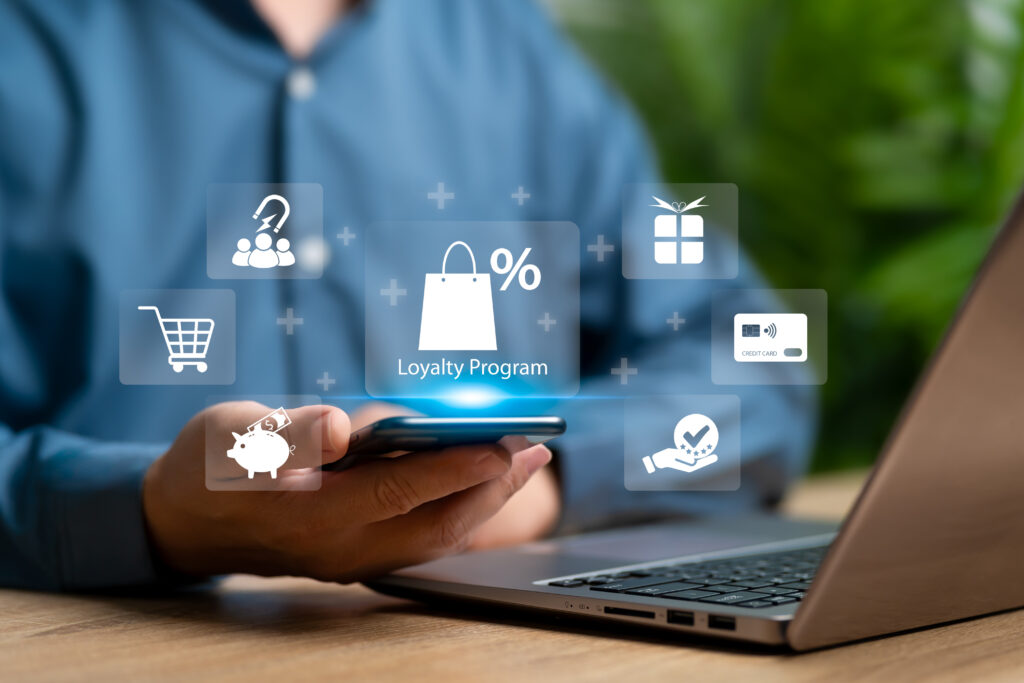
Customer loyalty programs must stay current, as 65% of retail sales come from loyal customers who spend 67% more on average than new customers do. AI changes the rigid structure of loyalty programs, where customers earn reward points reflected in dollars spent. This shift from transactional interactions to long-term, value-based relationships turns customers into true brand partners rather than passive participants. What’s more, AI-based tiering rewards customers before they make a purchase
Alternatively, when a customer makes an unexpected high-value purchase, they can be instantly elevated to a higher reward tier, unlocking perks like early access to exclusive products or enhanced discounts. These surprise upgrades reinforce loyalty and motivate continued spending.
Ingeniously, AI evolves with the customer. As behaviors and motivations shift, the system continuously refines its understanding, ensuring that loyalty remains dynamic, relevant, and rewarding. Let’s say a customer starts interacting with a brand less frequently. AI sends out an incentive to get the customer’s attention. Abandoned items in a cart may prompt AI to send out a purchase reminder with a discount.
Powered by customer data insights, gamification is a playful tool for engagement, offering personalized contests tailored to customers. Bulk purchasing could unlock surprise gifts. Interactive offers like BOGO can drive sales. Social media challenges, such as leaving reviews or sharing, can be used as incentives for rewards. When engagement dips, AI can adjust challenges.
Simplifying Reward Redemptions
A seamless reward redemption experience is one of the most powerful ways to strengthen customer loyalty. When the process feels effortless and consistent, it reinforces trust and keeps customers engaged. But when redemption becomes confusing or inconsistent, even the most loyal customers can lose interest.
Artificial intelligence is transforming this experience. By intelligently guiding customers through their reward options across every channel, AI ensures that redemption feels intuitive and rewarding. Real-time inventory synchronization eliminates frustration by only showing customers the rewards available.
This real-time data also empowers employees with up-to-date information to better serve customers, resolve inquiries, and deliver excellent CX.
Conclusion
The most innovative retailers know that technology isn’t about replacing human connection but amplifying it. When employees are equipped with AI-driven insights and inspired by purpose, they deliver experiences customers remember. EX + AI = CX is the new loyalty equation that lasts.